
Home · Learn
Cure research and advocacy
A handful of people have been cured of HIV, and each case teaches scientists something new. A cure for everyone is not here yet, but research is moving and people living with HIV have a real voice in how it is done.
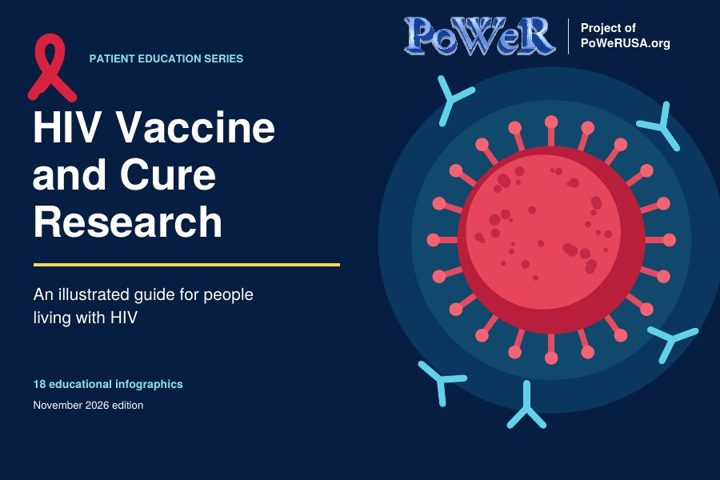
Free guide: HIV vaccine and cure research
Our illustrated guide explains vaccine and cure research in 18 one-page infographics, from where HIV hides in the body to the reported cure and remission cases. November 2026 edition.
Download the guide (PDF, 10.7 MB)
What's inside
Foundations: the big picture of HIV vaccine research, the road so far, how vaccines train your immune system, why HIV is difficult to vaccinate against, and where HIV hides in your body.
Prevention research: major vaccine trials, germline targeting, a new approach to mRNA vaccines, why antibody resistance matters, and combining two immune defenses.
Therapeutic research: why two antibodies might work better than one, the RIO trial on delaying HIV rebound, and training killer T cells and engineering B cells to fight HIV.
Cure, evidence and inclusion: six approaches to a cure, reported cure and remission cases, why research needs diverse participants, and how to tell promising results from proven benefits.
Who has been cured?
Timothy Ray Brown, the "Berlin patient," was the first person cured, after stem cell transplants for leukemia in 2007 and 2008. His donor carried a rare double mutation (CCR5-delta32) that blocks the main door HIV uses to enter cells. By April 2026, ten cures after stem cell transplants for blood cancers had been published in medical journals, with the "Oslo patient" the latest.
At the AIDS 2026 conference in July, doctors reported two more possible cures, in Essen, Germany, and Kansas City. Counting other reported cases, they will be the 12th and 13th people cured this way if they stay in remission. The Essen patient is the first cured person who also has hepatitis B.
Not every cure used a donor with the mutation. The "Geneva patient" appears cured after receiving cells without it, which tells researchers that other factors also matter.
Why transplants are not the answer
Stem cell transplants carry serious risks and high costs, so doctors only use them for people with life-threatening cancer. Researchers study these cases to learn how to reach the same result more safely, for example by using gene editing to protect a person's own cells from HIV, or by combining long-acting antibodies with treatments that wake up and clear hidden virus.
Joining a cure study safely
Many cure studies need volunteers, and some ask participants to pause HIV treatment under close monitoring. Before you join, ask:
- What is the study testing, and what could go wrong?
- Will I need to stop my HIV drugs, for how long, and what are the rules for restarting?
- How will my partners be protected if my viral load rises?
- Who pays for my care if I have a side effect, and can I leave at any time?
Search for studies at ClinicalTrials.gov and review any study with your own HIV provider.
Protecting HIV care and research
US funding for HIV care is under pressure. In early 2026, Congress kept funding for the Ryan White HIV/AIDS Program at its existing level for fiscal year 2026, rejecting nearly $2 billion in proposed cuts to HIV programs. The fight continues. The White House budget request for fiscal year 2027 proposes eliminating CDC HIV prevention and Part F of Ryan White, which funds dental care and clinician training. The House version of the 2027 spending bill would cut about $225 million from Ryan White.
Some state AIDS Drug Assistance Programs (ADAPs) have already started waiting lists for HIV medicines. If you depend on Ryan White or ADAP, tell your representatives what these programs mean to you. Find your US representative and senators.
Learn more
- HIV cure update: advocates discuss the research (PoWeR video)
- Immune-enhancing therapies for immunologic non-responders (PoWeR video)
From our archive
- HIV Cure Update 2017: Interview with Leading Research Advocates2018
- Why Has Only One Person Been Cured of HIV in 10 Years?2017
- How Researchers Are Now Trying to Cure More HIV+ People2017
- Webcast : Beyond the Berlin Patient- How Researchers Are Now Trying to Cure More HIV+ People2015
- What Can We Look Forward to in HIV Cure Research? Conversation With Research Advocate Richard Jefferys2013
- New HIV Eradication Study: The Use of a Personalized ImmuneTherapy (AGS-004) with a Reservoir Activating Agent2013
Sources
- IrsiCaixa: From the Berlin patient to the Oslo patient, ten people cured (April 2026)
- aidsmap: Two more people cured of HIV after stem cell transplants (AIDS 2026)
- aidsmap: AIDS 2026 bulletin, 3 August 2026
- Healio: Kansas City man potentially cured of HIV
- HIVMA: Congress maintains federal funding for HIV programs (Feb 2026)
- HIVMA: President's FY 2027 budget proposal (April 2026)
- HIVMA: House FY 2027 Labor-HHS bill
- POZ: House Republicans propose cuts to domestic HIV programs